
The Canton Fair can put thousands of Chinese suppliers within reach during a single trip. It can also consume five days without producing a reliable shortlist. The difference is preparation: choosing the correct entry route, registering before arrival, mapping the right exhibition phase and deciding how every promising supplier will be verified after the show.
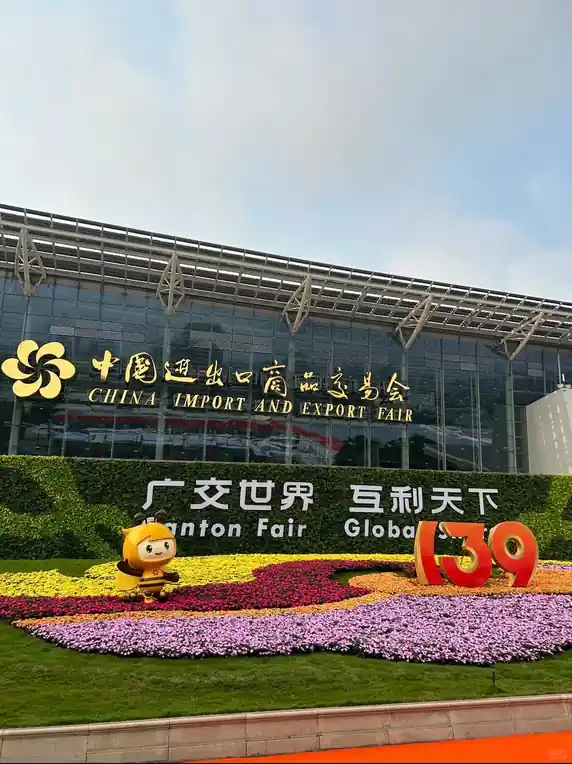
This Canton Fair Guide 2026 is written for international importers, private-label brands and procurement teams—not general visitors. It covers the practical decisions behind a Guangzhou sourcing trip, from entry and buyer registration to booth meetings, sample control and factory follow-up.
Use the National Immigration Administration for current entry rules and the official Canton Fair website for session dates, product categories, registration and badge arrangements.
| Route | Usually better suited to | Critical check before booking |
|---|---|---|
| Business visa | Longer or non-transit itineraries and trips that do not meet visa-free transit conditions | Requirements published by the Chinese embassy, consulate or visa center responsible for your application |
| 240-hour visa-free transit | Eligible buyers with a qualifying third-country or third-region itinerary | Nationality, entry and exit ports, permitted areas, confirmed onward ticket and current immigration rules |
1. Canton Fair visa options: M visa or 240-hour visa-free transit?
Your entry route should be decided before you book flights, hotels or supplier appointments. The two options most business visitors consider are a conventional business visa and China’s 240-hour visa-free transit policy.
Path A: a conventional business visa
A business visa may be the more suitable route when your itinerary does not meet transit requirements, you need a longer stay, or your planned destinations fall outside the areas currently permitted under visa-free transit. Depending on the application and local consular requirements, supporting documents may include an invitation issued through the Canton Fair system or by a Chinese business partner.
An invitation letter supports a visa application; it does not prove that the inviting supplier owns a factory, controls production or is commercially reliable. Supplier identity and manufacturing capability still need to be checked separately.
An official invitation can document the traveler’s identity, overseas company and intended fair visit, and may support an M- or F-visa application where the responsible embassy, consulate or Chinese Visa Application Service Center requests it. It may also help explain the commercial purpose of the trip during buyer-registration or arrival checks. It is not a government guarantee of any exhibitor’s credit, manufacturing status or product quality, and it cannot replace the passport and confirmed onward ticket required for 240-hour visa-free transit.
Path B: 240-hour visa-free transit
Eligible travelers may be able to enter through an approved port and remain within the permitted areas for up to 240 hours while transiting to a third country or region. This is a transit arrangement, not a general ten-day visa waiver.
View the 57 eligible countries for 240-hour visa-free transit
Europe · 40 countries
Austria, Belgium, the Czech Republic, Denmark, Estonia, Finland, France, Germany, Greece, Hungary, Iceland, Italy, Latvia, Lithuania, Luxembourg, Malta, the Netherlands, Poland, Portugal, Slovakia, Slovenia, Spain, Sweden, Switzerland, Monaco, Russia, the United Kingdom, Ireland, Cyprus, Bulgaria, Romania, Ukraine, Serbia, Croatia, Bosnia and Herzegovina, Montenegro, North Macedonia, Albania, Belarus and Norway.
The Americas · 6 countries
United States, Canada, Brazil, Mexico, Argentina and Chile.
Oceania · 2 countries
Australia and New Zealand.
Asia · 9 countries
South Korea, Japan, Singapore, Brunei, the United Arab Emirates, Qatar, Indonesia, Kyrgyzstan and Vietnam.
The earlier 54-country list has since been expanded to include Indonesia, Kyrgyzstan and Vietnam. Nationality is only one condition: verify the latest list, eligible ports, permitted areas and onward-ticket requirements with China’s National Immigration Administration before travel.
- Nationality: your passport must be on the current official eligibility list.
- Entry and exit: you must use eligible ports and follow the geographical limits published for the policy.
- Onward travel: you need confirmed onward travel to a third country or region within the permitted period.
- Documents: carry your valid passport, confirmed tickets and accommodation and itinerary details.
A route such as London → Guangzhou → Hong Kong may qualify in principle because Hong Kong is treated as a separate destination for immigration purposes. London → Guangzhou → London is not a transit to a third destination. Eligibility still depends on the traveler, ports, tickets and current rules, so confirm the complete itinerary with the relevant authorities and carrier before departure.
Do not build a factory schedule around the full 240 hours. Arrival procedures, hotel check-in, fair days, intercity transfers and the confirmed departure time all reduce the usable window.
2. Register for your Canton Fair buyer badge before arrival
Complete overseas buyer pre-registration through BEST (Buyer E-Service Tool) before you fly. BEST is the fair’s overseas-buyer business system for registration and related buyer services. The current session instructions will specify the identity, company and photograph requirements, as well as the available locations for collecting a physical buyer badge.
Prepare the passport identity page used for registration, a recent compliant ID photograph and the company materials requested by the system, such as an English business card or company registration document. Follow the live BEST checklist rather than an old third-party screenshot.
Bring the original travel document used for registration and retain your confirmation materials. Do not assume that an airport, hotel or off-site registration counter offered in a previous session will operate in 2026; check the collection locations published for your specific session.
Where buyer badges may be collected
Depending on the session, the organizer may publish remote registration points at Guangzhou Baiyun International Airport, selected partner hotels and the Pazhou Ferry Terminal, in addition to overseas-buyer registration offices at the Canton Fair Complex. Availability, opening hours, eligible applicants and fees can vary. Treat the official collection-point notice for your session as controlling.
If you already hold a previous overseas buyer badge, check BEST for the current activation and admission instructions before applying for a replacement. Do not discard an earlier badge merely because the session number has changed.
Accommodation strategy
During the fair, a cheap room with an uncertain commute can cost more than a well-connected hotel. Prioritize predictable access to the Canton Fair Complex, also widely called the Pazhou Complex. Hotels near Guangzhou Metro Line 8—particularly with practical access to Xingangdong or Pazhou stations—or those operating a confirmed fair shuttle can be useful, but always calculate the full door-to-hall journey rather than relying on a hotel’s marketing description.
- Confirm whether the shuttle runs for your phase and whether advance booking is required.
- Check the walking distance from the nearest metro station, not just the station name.
- Leave a buffer for security, badge issues and movement between exhibition areas.
3. Choose the correct phase and build a sourcing route
The 140th Canton Fair takes place in autumn 2026. It is divided into three five-day phases, with a gap between phases for exhibitor changeover.
| Phase | Dates | Broad product focus |
|---|---|---|
| Phase 1 | October 15–19, 2026 | Electronics and electrical products, industrial machinery, hardware, new-energy vehicles and lighting |
| Phase 2 | October 23–27, 2026 | Consumer goods, gifts, home and building materials, tableware, ceramics and furniture |
| Phase 3 | October 31–November 4, 2026 | Textiles and apparel, footwear and leather goods, food, healthcare, personal care, sports and leisure |
These broad groupings are useful for planning, but individual exhibition sections can move or be renamed. Confirm the exact 2026 placement using the official exhibitor and product overview and Canton Fair exhibitor search before buying phase-specific flights or scheduling meetings.
Build a decision sheet before the show
For each target product, record the required specification, annual volume, target order quantity, compliance market, packaging, acceptable lead time and unresolved technical questions. Use the same fields for every booth so that quotations remain comparable after several days of meetings.
Shortlist exhibitors and request appointments in advance. Group meetings by exhibition area and hall instead of by the order in which suppliers reply. The complex is large enough that poor routing can remove several useful meetings from a day.
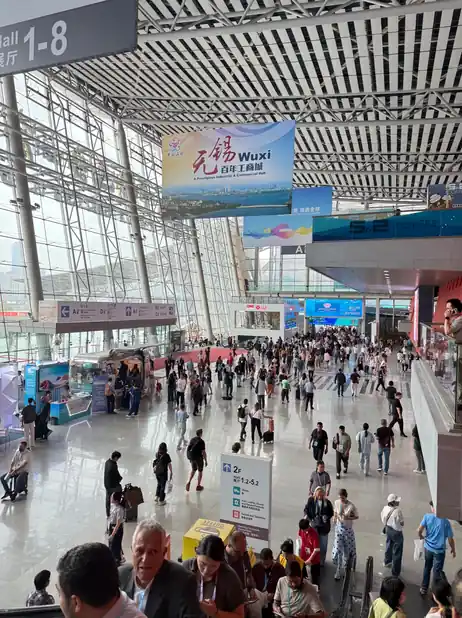
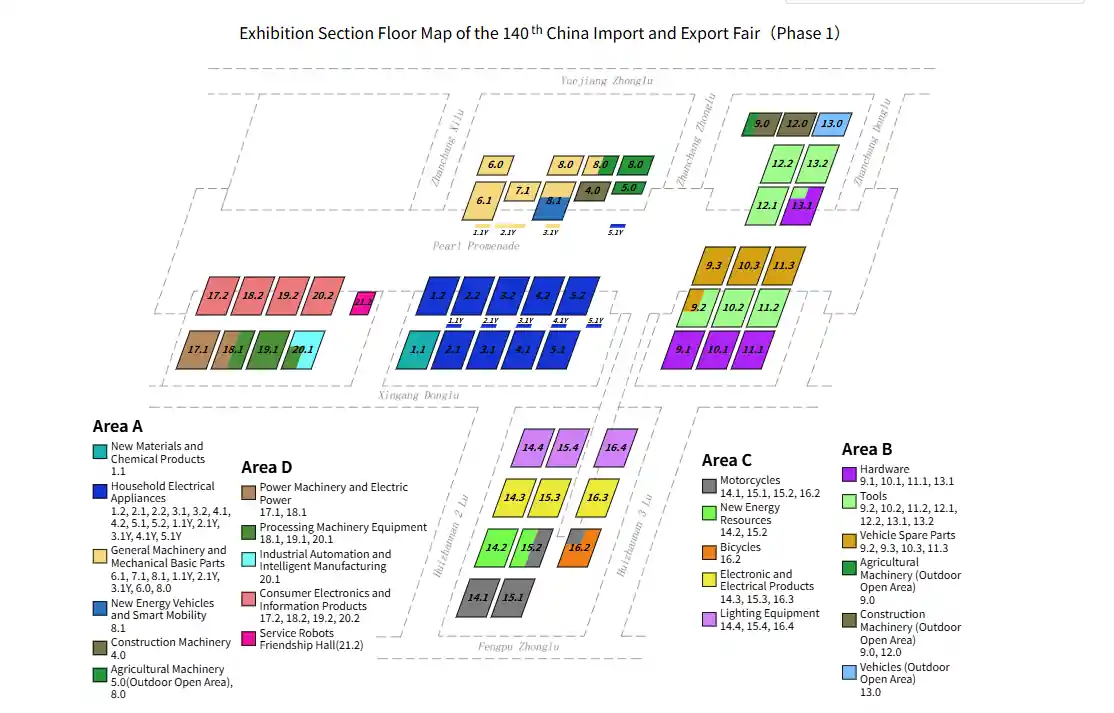 Open the official interactive Canton Fair hall map →Switch phases on the official map to view the current hall and exhibition-section layout. Opens in a new tab.
4. Prepare connectivity, field gear and payment controls
A productive fair day depends on small operational details. Set up communications, payment and a lightweight field kit before arriving at the Pazhou Complex.
Digital access and mobile payment
- Connectivity: consider an international-roaming plan or overseas travel eSIM, and confirm how your provider routes data in mainland China. Access to individual overseas services varies by carrier and plan; test essential business apps before relying on them.
- Backup access: download documents, supplier contacts, maps and translation resources for offline use. Do not make one cloud service your only copy of the day’s schedule.
- Mobile payment: install Alipay and WeChat before departure and complete any identity or foreign-card setup they require. Test a small payment after arrival and keep a physical bank card and some RMB as fallbacks.
What experienced buyers carry
- Bilingual business cards: bring enough for scheduled and unplanned meetings. A Chinese name, role or company description on the reverse can make follow-up easier.
- Small wheeled cabin bag: catalogs and samples become heavy quickly. Use a compact trolley that remains easy to control in crowded halls.
- Basic inspection tools: a pocket tape measure, digital caliper and compact high-CRI flashlight can help verify simple dimensions and visible finish at the booth. They do not replace formal testing.
- Power bank and cables: carry your own compliant power bank instead of depending on a rental service that may require local app registration or payment.
A polished booth is not proof of the contracting entity or factory. Avoid cash deposits and do not send funds from the show floor. After the fair, verify the Chinese company name, registered address and payment beneficiary; document the commercial terms; then use the payment method agreed in the signed contract. Escalate any request to pay an unrelated personal or third-party account.
5. Negotiate at the booth without losing control of the details
A fair quotation is the start of due diligence, not the end of negotiation. Bring a concise company introduction and a product specification sheet that makes the intended market and quality level clear.
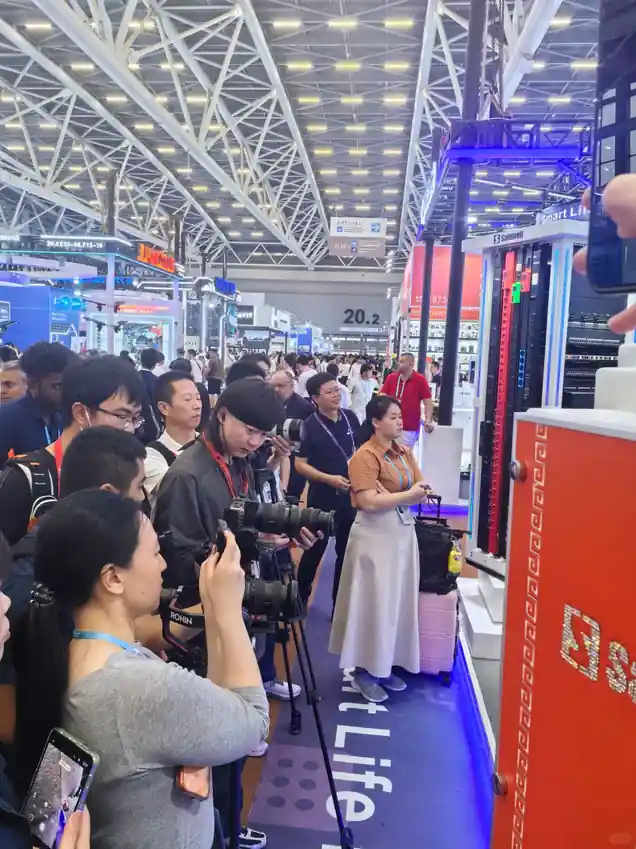
- Record the legal company name, booth number and contact person together.
- Ask which processes are performed in-house and which are subcontracted.
- Confirm whether the quoted MOQ applies to one model, color, size or total order.
- State the Incoterm and named place—for example, FOB Shenzhen—not merely “FOB.”
- Separate tooling, testing, packaging, labeling and sample charges from the unit price.
- Photograph products only with permission and include the model or sample reference in the frame.
Control samples instead of collecting anonymous products
Label every sample with the supplier, booth, model, quoted specification and date before it leaves your hands. For multiple suppliers, sending items to one local consolidation point can create a cleaner record than arranging unrelated international shipments at different booths.
Courier and business-service arrangements vary by session and location. Check the official on-site service directory rather than assuming a specific carrier will have a counter inside your exhibition area.
6. Use the post-fair window for verification
The most valuable part of a Canton Fair trip may happen after the halls close. Guangzhou is within reach of manufacturing clusters in Foshan, Dongguan and Shenzhen, making it possible to compare a supplier’s booth presentation with its registered entity, production site and actual process control.
Prioritize factories based on commercial importance and unresolved risk. A useful visit should verify more than a showroom:
- Does the factory name and address match the entity that will receive payment?
- Are the claimed production processes, equipment and active lines present?
- Which critical processes or components are subcontracted?
- Can the team show recent incoming, in-process and final inspection records?
- Does the proposed capacity make sense when compared with workforce, equipment and current orders?
A supplier should not pass simply because a factory exists. The objective is to identify which claims are supported, which controls are missing and what must be agreed before a deposit or production order.
7. Canton Fair 2026 buyer checklist
Before booking
- Confirm the correct session, phase and official product category.
- Verify your visa or 240-hour transit eligibility and complete route.
- Choose accommodation based on door-to-hall travel time.
Before the fair
- Complete official buyer pre-registration and check badge collection instructions.
- Create a supplier shortlist, hall route and meeting calendar.
- Prepare product specifications and a consistent quotation sheet.
At and after the fair
- Connect every contact, quotation, photograph and sample to one supplier record.
- Normalize pricing and clarify Incoterms, tooling, compliance and packaging.
- Verify shortlisted suppliers before deposits or large purchase orders.
- Plan sample consolidation, inspection and shipping as separate controlled steps.
The Canton Fair is excellent for discovery. It is not a substitute for supplier verification, product testing or a well-defined purchase agreement. Treat the fair as the top of the sourcing funnel, then use evidence from samples, documents and factory checks to decide who moves forward.