If you are planning a fragrance launch from China, the most dangerous number you can carry into supplier negotiations is a single “per-unit cost.” Perfume OEM pricing is not one number. It is a stack of at least six cost layers—fragrance oil, bottle, cap, rigid box, filling and dangerous-goods freight—each of which behaves differently as your order moves from 1,000 units to 10,000 units.
This guide is written from the buyer-side sourcing perspective. Jaime Sourcing coordinates and verifies suppliers across Guangzhou, Shenzhen, Dongguan and Foshan. We do not manufacture perfume, own filling lines or issue regulatory certificates. What we do is help international brand founders, procurement managers and compliance teams separate real quotations from optimistic desk research, and understand what a landed-cost quotation must include before you commit working capital.
Before we go further, one structural point matters more than any individual price: at 1,000 units you are paying for setup, compliance and freight inefficiency. At 10,000 units you are paying for materials, labor and freight efficiency. The cost per unit can fall by 30–50% between these two volumes, but only if the quotation is structured correctly and the hidden costs are surfaced early.
If you are still at the stage of evaluating whether a supplier is real, start with supplier verification in China before you request pricing. A low quotation from an unverified trading company is not a cost saving; it is a risk transfer.
Full Unit Cost Breakdown: Fragrance Oil, Bottle, Cap, Rigid Box, Filling & DG Freight
A complete perfume OEM quotation should separate at least six cost components. If a supplier gives you one blended EXW price without a breakdown, ask for the split. Without it, you cannot negotiate intelligently or compare quotations across suppliers.
1. Fragrance oil
Fragrance oil is usually the highest-variance component. It depends on concentration (eau de toilette, eau de parfum, extrait), raw material rarity, and whether you are using an existing stock fragrance, a modified stock fragrance or a fully custom development.
- Stock or white-label fragrance: lowest cost, fastest availability, but no exclusivity.
- Modified fragrance: mid-range cost, some exclusivity, shorter development than full custom.
- Custom OEM fragrance: highest cost, full formula ownership, longest development.
At 1,000 units, the fragrance oil cost per unit is often inflated by minimum purchase quantities for rare raw materials. At 10,000 units, the same formula can be purchased in bulk and the per-unit oil cost drops meaningfully. Do not assume the oil price scales linearly.
2. Bottle
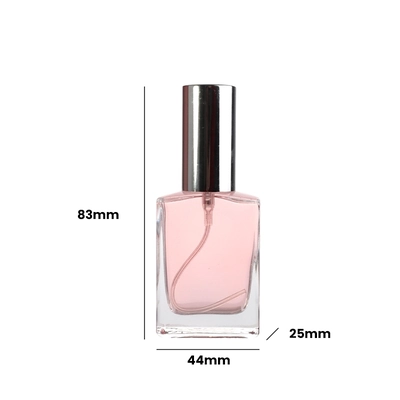
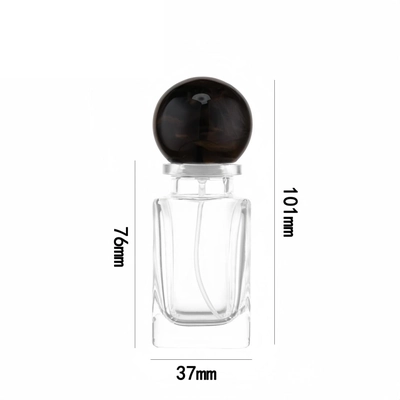
Glass bottle pricing is driven by mold status and order quantity.
- Stock bottle: no tooling, available from existing molds. Best for 1,000-unit launches.
- Semi-custom bottle: existing mold with custom decoration, color or coating.
- Fully custom bottle: new mold required. Tooling cost is separate and significant.
At 1,000 units, a stock bottle is almost always the rational choice. At 10,000 units, a custom or semi-custom bottle becomes more justifiable because the tooling amortization per unit falls sharply.
3. Cap
Caps can be plastic, metal, zamak, wood or hybrid. Metal and zamak caps carry higher unit costs and often longer lead times due to plating and polishing. At 1,000 units, custom metal caps are rarely economical. At 10,000 units, they may still be expensive but the per-unit premium is easier to absorb.
4. Rigid box
Rigid boxes are labor-intensive to produce and assemble. The cost per box drops significantly as quantity increases because setup time on die-cutting, mounting and assembly lines is spread across more units. At 1,000 units, rigid box cost per unit can be surprisingly high—sometimes approaching the cost of the bottle itself. At 10,000 units, the same box may cost 40–60% less per unit.
5. Filling
Filling cost includes alcohol or oil base, maceration time, filtration, filling, crimping, capping and labeling. At 1,000 units, line setup and changeover costs dominate. At 10,000 units, the filling cost per unit drops because the line runs continuously.
6. DG freight
Perfume containing alcohol is classified as dangerous goods (DG) for air and sea freight. DG freight is not a small line item. It requires:
- UN-approved outer cartons
- DG documentation and declaration
- DG surcharges from the carrier
- Possible consolidation restrictions
At 1,000 units, DG freight per unit can be brutal because you are paying for a full pallet or minimum chargeable weight regardless of how full it is. At 10,000 units, the freight cost per unit falls substantially as you fill containers or consolidate more efficiently.
Decision table: 1,000 vs 10,000 units
| Cost component | 1,000 units behavior | 10,000 units behavior |
|---|---|---|
| Fragrance oil | High per-unit due to raw material MOQs | Lower per-unit, bulk purchasing |
| Bottle | Stock mold recommended; custom tooling not amortized | Custom mold becomes viable |
| Cap | Stock or simple cap recommended | Custom cap more justifiable |
| Rigid box | High per-unit due to setup labor | 40–60% lower per-unit |
| Filling | Setup and changeover dominate | Line efficiency reduces per-unit cost |
| DG freight | High per-unit, minimum chargeable weight | Lower per-unit, fuller consolidation |
Indicative packaging budget ranges for early planning
The following figures are non-binding Pearl River Delta sourcing indications, not supplier quotations. They are useful for an initial budget only and must be refreshed against the exact drawing, weight, finish, order quantity, packing method and Incoterm before a purchase decision.
| Component | Indicative planning range (USD/pc) | Main variables |
|---|---|---|
| Stock-mold perfume glass bottle | $0.25–$0.65 | Glass weight, clarity, capacity and decoration |
| Crimp fine-mist pump | $0.08–$0.22 | FEA finish, dosage, actuator, collar and gasket |
| Rigid setup box | $0.45–$1.20 | Board thickness, insert, paper, foil and assembly |
| UN-rated dangerous-goods outer carton | $1.80–$3.50 per outer carton | Certification, bottle count, dividers and route requirements |
These ranges exclude fragrance oil, alcohol base, filling, testing, molds, domestic collection, export handling and international freight. Indicative Pearl River Delta ranges, subject to weight, finish, verified supplier quotation and shipment configuration.
Hidden Startup Expenses Buyers Forget: Tooling, Compliance Testing & UN Cartons
The gap between an EXW quotation and the true landed cost is where perfume launches go over budget. Three hidden expense categories consistently surprise first-time buyers.
Tooling
Tooling is a one-time capital expense, not a per-unit cost. It applies to:
- Custom glass bottle molds
- Custom cap molds
- Custom rigid box dies
- Custom labeling plates or screens
Tooling is often quoted separately and is non-refundable. At 1,000 units, tooling can double your effective per-unit cost. At 10,000 units, the same tooling amortizes to a fraction of a dollar or euro per unit. Always ask: “Is tooling included, and if not, what is the exact tooling cost and ownership arrangement?”
Compliance testing
Perfume sold in the EU, US, UK or other regulated markets requires documentation that is not automatically included in an OEM quotation. Typical requirements may include:
- IFRA certificate for the fragrance concentrate
- Allergen declaration
- Safety data sheet (SDS)
- Stability and compatibility testing
- Product information file (PIF) for EU cosmetics
- CPNP notification for EU market entry
- MoCRA facility and product listing for the US
Jaime Sourcing does not issue IFRA, CPNP, MoCRA, SDS or other regulatory certificates. These must come from the fragrance house, the filling facility or a qualified regulatory consultant. What we can do is coordinate sample consolidation and documentation collection so you are not chasing five suppliers for five different documents. For multi-vendor projects, sample consolidation in China is often the fastest way to get a complete compliance package in one shipment.
UN cartons
Alcohol-based perfume cannot ship in standard export cartons. It requires UN-approved packaging that has passed specific performance tests. UN cartons cost more than standard cartons and must be sourced from certified packaging suppliers. At 1,000 units, the UN carton cost per unit is high because you are buying small quantities of specialized packaging. At 10,000 units, the per-unit cost drops but the line item never disappears.
Checklist: Hidden costs to confirm before ordering
- Tooling cost for bottle, cap, box and label — included or separate?
- Tooling ownership — who owns the mold after production?
- IFRA certificate availability for the chosen fragrance
- Allergen declaration and SDS
- Stability and compatibility testing scope and cost
- UN-approved outer carton cost
- DG documentation and surcharge
- Regulatory notification responsibility (CPNP, MoCRA, etc.)
Realistic Production Timeline: Why Quality Perfume Takes 60–90 Days
If a supplier promises a fully custom perfume OEM project in 30 days, treat that as a red flag. Quality perfume involves steps that cannot be compressed without compromising the product.
A realistic planning scenario for custom OEM development is 90–120 days including development, while white-label or stock fragrance projects can move faster. For a project using an existing or modified fragrance with stock packaging, a 60–90 day production window may be achievable if the formula, components, artwork, compliance route and dangerous-goods booking are already approved. Confirm both ranges in writing with the selected suppliers and forwarder.
Typical timeline breakdown
| Phase | Duration | Notes |
|---|---|---|
| Fragrance selection or development | 2–6 weeks | Stock is fastest; custom development adds weeks |
| Sample approval | 1–2 weeks | Includes scent, bottle, cap, box |
| Packaging production | 3–5 weeks | Bottle, cap, box production in parallel |
| Filling and assembly | 1–2 weeks | Includes maceration if required |
| Compliance documentation | 1–3 weeks | Can run in parallel if planned early |
| DG freight to destination | 1–4 weeks | Air vs sea, destination dependent |
The critical path is usually packaging production, not filling. Bottles, caps and rigid boxes are produced by different suppliers and must arrive at the filling facility at the same time. If one component is late, the entire project slips. This is why cosmetic packaging sourcing in China requires active coordination, not just purchase orders.
Some suppliers may quote 4–7 days for a small evaluation set, but that is a quotation assumption rather than a universal industry standard. Confirm sample quantity, formula maturity, packaging availability and shipping method in writing. A fast lab sample is useful for evaluation, but it is not the same as production lead time.
Cost-Optimization Levers Without Compromising Scent or Shelf Presence
Cost reduction in perfume OEM is not about finding the cheapest supplier. It is about making structural choices that reduce cost per unit without making the product look or smell cheap.
Lever 1: Start with stock packaging at 1,000 units
The single biggest cost lever for a small launch is choosing stock bottles, caps and boxes. Custom tooling at 1,000 units can add several dollars or euros per unit in amortized cost. A well-chosen stock bottle with custom labeling or screen printing can look premium without the tooling burden.
Lever 2: Use a modified stock fragrance instead of full custom
Full custom fragrance development carries R&D costs and longer timelines. A modified stock fragrance—where an existing base is adjusted slightly—can give you a distinctive scent profile at a fraction of the development cost. This is a strong middle ground for brands that want some exclusivity without full OEM investment.
Lever 3: Consolidate packaging suppliers
If your bottle, cap and box come from three different suppliers in three different cities, you pay three sets of domestic freight, three coordination overheads and three chances for delay. Consolidating through a sourcing team that coordinates multiple suppliers can reduce domestic logistics cost and improve timeline reliability. Our cosmetic packaging sourcing in China service covers the coordination layer that many first-time buyers underestimate.
Lever 4: Plan DG freight before production starts
DG freight cost is often discovered late, after the goods are already filled and packed. By planning UN carton requirements, DG documentation and consolidation strategy before production begins, you can avoid expensive last-minute air freight or re-packing charges.
Lever 5: Order 10,000 units only when demand is proven
The per-unit cost at 10,000 units is dramatically lower, but only if you can actually sell 10,000 units. A 1,000-unit launch with stock packaging and a modified fragrance lets you test the market. If the product sells, the second order at 10,000 units captures the volume economics without the risk of being stuck with 9,000 unsold units.
Request a Custom Landed-Cost Quotation for Your Perfume Project
A useful landed-cost quotation is not a single number. It is a document that separates:
- EXW cost — goods at the factory gate in China
- Domestic freight — from factory to port or consolidation warehouse
- Export packing and labeling — including UN cartons
- FOB cost — goods loaded on the vessel or aircraft
- International freight — DG surcharges included
- Insurance — if required
- CIF cost — cost, insurance and freight to destination port
- DDP cost — delivered duty paid, including import duties and taxes
Each incoterm shifts risk and cost responsibility. A quotation that says “$X per unit” without specifying the incoterm is not a quotation; it is a conversation starter.
Before you request pricing, prepare a project brief that includes:
- Target volume (1,000 or 10,000 units, or a range)
- Fragrance type (stock, modified or custom)
- Concentration (EDT, EDP, extrait)
- Bottle, cap and box preferences (stock or custom)
- Destination country and preferred incoterm
- Regulatory market (EU, US, UK, other)
- Timeline requirement
If you are not sure whether a supplier is legitimate, run an independent factory audit service before you send a deposit. And before goods leave China, a pre-shipment inspection service can catch filling defects, labeling errors and packaging damage while correction is still possible.
Jaime Sourcing works on the buyer’s side. We do not take supplier commissions, and we distinguish desk research from on-site verification. If you need a coordinated quotation that separates every cost layer and verifies every supplier, send Jaime Sourcing your perfume project brief and we will structure the landed-cost analysis for your specific volume, destination and regulatory market.
Turn your fragrance concept into a verifiable supplier brief.
Share your target market, bottle size, fragrance format, quantity, packaging direction and launch timing. We will identify the supplier, sampling, compliance-document, inspection and freight checkpoints.